
CARPAL TUNNEL SYNDOME
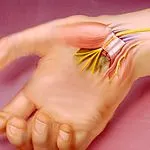
Carpal tunnel syndrome causes tingling, numbness, or pain in the hand. The wrist bones and ligament form a tunnel, a passage for the median nerve and finger tendons. Repetitive strain may cause swelling that traps the nerve within the tunnel. Treatments include modifying activities, physical therapy, a wrist brace, or medications. Surgery that re-opens the space and frees the nerve may be an option
ANTERIOR CERVICAL DISCECTOMY AND FUSION (ACDF)
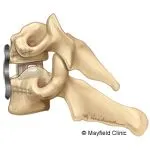
Anterior cervical discectomy and fusion is a surgery to remove a herniated or degenerative disc in the neck. An incision is made in the throat area to reach and remove the disc. A graft is inserted to fuse together the bones above and below the disc. ACDF may be an option if physical therapy or medications fail to relieve your neck or arm pain caused by pinched nerves. Patients typically go home the same day.
ANTERIOR LUMBAR INTERBODY FUSION (ALIF)
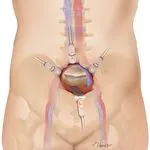
Anterior lumbar interbody fusion is a surgery to treat disc problems in the low back. Fusion locks together two or more bones to stop painful motion and correct their alignment. Through an incision in the front of the belly, the disc is removed. A bone graft is placed in the empty space to restore the height and relieve nerve pinching. During healing, the bones fuse into one solid piece.
LUMBAR DISCECTOMY
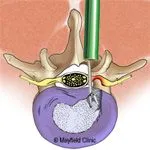
Lumbar discectomy is a surgery to remove a herniated or degenerative disc in the lower spine. The incision is made posterior, through the back muscles, to reach and remove the disc pressing on the nerve. Discectomy may be recommended if physical therapy or medication fail to relieve leg or back pain caused by pinched spinal nerves. The surgery can be performed in an open or minimally invasive technique.
LAMINECTOMY, SPINAL DECOMPRESSION
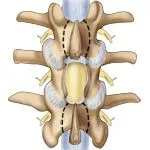
Decompression surgery (laminectomy) removes the bony roof covering the spinal cord and nerves to create more space for them to move freely. Narrowing / stenosis of the spinal canal can cause chronic pain, numbness, and muscle weakness in the arms or legs. Surgery may be recommended if your symptoms have not improved with physical therapy or medications.
LATERAL LUMBAR INTERBODY FUSION (LLIF)
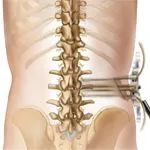
Lateral interbody fusion is a minimally invasive surgery to treat disc problems in the low back. In spinal fusion, two or more bones of the spine are joined to stop painful motion, decompress pinched nerves, and correct scoliosis. Through a small incision at the side of the waist, the disc is removed and a bone graft is inserted to restore the height and relieve nerve pinching. During healing, the bones will fuse together.
PREPARING FOR LUMBAR SPINAL FUSION
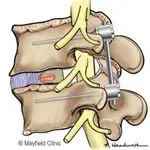
Spinal fusion is a surgery that permanently joins together one or more bony vertebrae of the spine. Abnormal movement of the vertebrae rubbing against one another may result in back, leg, or arm pain. Fusing the vertebrae bones together stabilizes and aligns the spine, maintains the normal disc space between the bones, and prevents further damage to the spinal nerves and cord.
SPINAL CORD STIMULATION
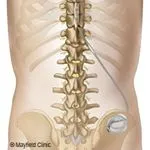
Spinal cord stimulation delivers low voltage current to block the feeling of pain. A small device implanted in the body transmits an electrical current to the spinal cord. When turned on, the stimulation feels like a mild tingling in the area where pain is felt. It helps patients with chronic pain better manage symptoms and potentially decrease use of pain medications.
SPINAL PAIN PUMP (INTRATHECAL DRUG PUMP)
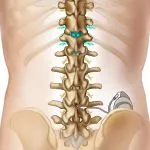
A "pain pump" is a method of giving medication directly to the spinal cord. The system uses a small pump that is surgically placed under the skin of your abdomen. The pump delivers medication through a catheter to the space around your spinal cord. Because the drug is delivered directly to the pain area, symptoms can be controlled with a much smaller dose than is needed with oral medication.
TRANSFORAMINAL LUMBAR INTERBODY FUSION (TLIF)
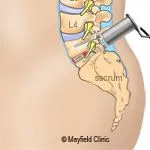
Transforaminal lumbar interbody fusion is a surgery used to treat disc problems in the low back. Fusion locks together two or more bones to stop painful motion, relieve pinched nerves, and correct scoliosis. Through small, minimally invasive incisions in the back, the disc is removed. A bone graft spacer is placed in the space to restore the height and relieve nerve pinching. During healing, the bones fuse together.
VERTEBROPLASTY & KYPHOPLASTY
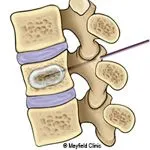
Vertebroplasty and kyphoplasty are minimally invasive procedures used to treat vertebral compression fractures of the spine. These painful, wedge-shaped fractures can be caused by osteoporosis or injury. Left untreated, they can lead to a humped spine. By restoring the vertebra height with a balloon and injecting a cement into the fractured bone, patients can recover faster and reduce the risk of future fractures.